Here you can find names, dates of life, biographies and family stories about Jewish life in Lüneburg. Do you have further information, corrections, photographs, documents or suggestions?
Please feel free to contact us so that we can update the pages.
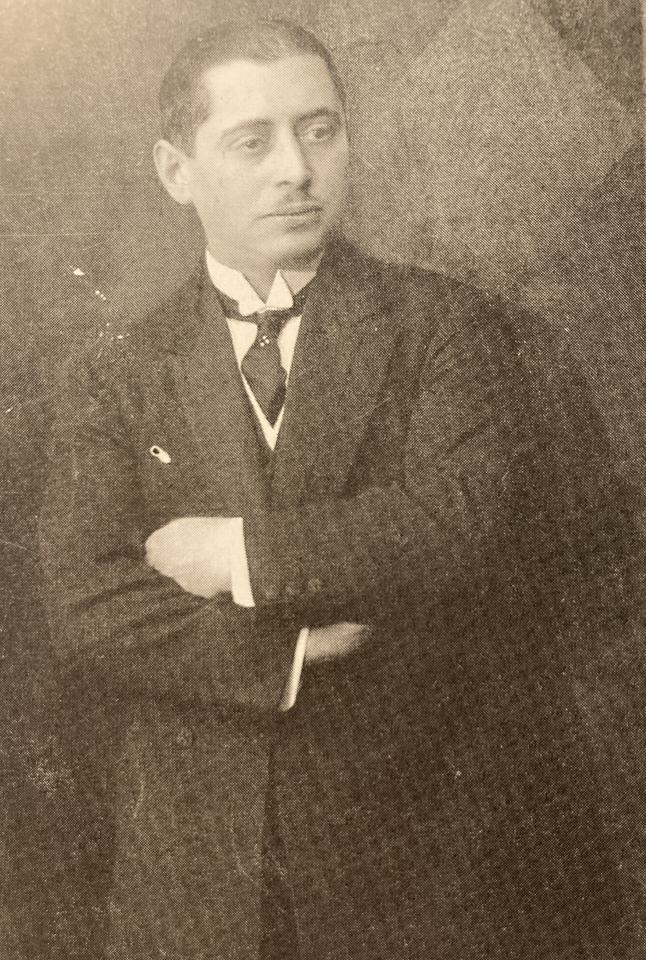
Albert Jacobsohn, born in 1888, was the third child of the Lüneburg banker Moritz Mendel Jacobsohn and his wife Betty, née Heinemann. He grew up with his siblings in Lüneburg. Shortly after his birth, the family moved into a villa in Haagestraße with a large garden. Albert attended the traditional Johanneum grammar school in Lüneburg, where he graduated.
After his older brother Hermann decided to pursue a career in literature, it was Albert"s turn to join his father"s business. He began his apprenticeship in Lüneburg and then worked in banks in Berlin and London.
In 1901, Albert joined his father"s old Regiment 77 as a volunteer and aspired to become a reserve officer. He passed all his exams with flying colors and was very popular with his superiors and comrades. But suddenly, in 1903 he was denied an officer"s commission, on the basis of falsified poor evaluations, apparently due to his Jewish origins.
His father Moritz Jacobsohn, who himself had been promoted to officer and decorated several times during the war of 1870/71, could not believe it. He later wrote in his memoirs: "It was known that no Jewish officer aspirant had been promoted under Kaiser Wilhelm II, but I had believed that the son of an old campaign officer would be treated differently, and I wrote to the Kaiser with this in mind. I was deeply offended by this shameful betrayal." However, the petition to the Emperor did not help either.
For Moritz Jacobsohn, this “miserable, sad thing for me” was a bitter experience, and for Albert it was probably also a clear signal that there were still no real equal rights for Jews in the German Empire.
After this episode, Albert Jacobsohn concentrated on his work as a banker again. He worked and lived in London until 1908, where he felt very much at home. His father then brought him back to Lüneburg because he needed him at his bank. Albert became an authorized signatory there and lived in his home town of Lüneburg again.
He was a talented violinist, played chamber music and performed at family celebrations. At the same time, he was now an experienced banker. It was generally expected that Albert would take over his father"s bank.
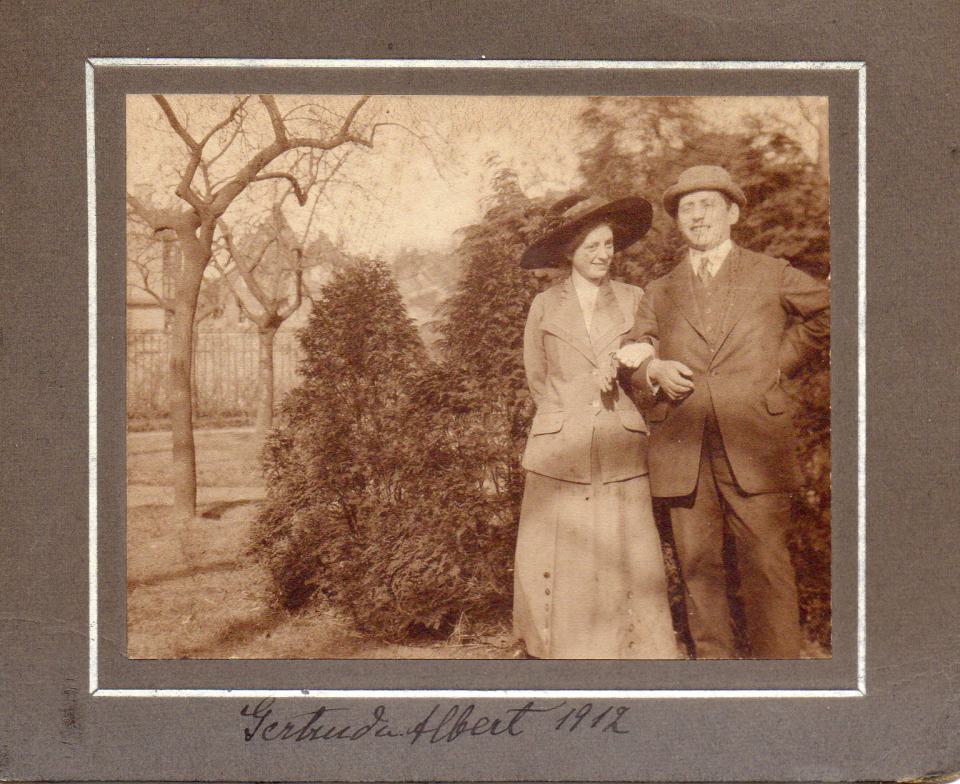
In 1910, however, he was diagnosed with a life-threatening brain tumor and was in danger of going blind. After an operation in Vienna - performed by a young specialist using a newly developed method - Albert returned to Lüneburg, seemingly cured. The family was extremely relieved. Albert was able to make plans again. At the end of 1911, he became engaged to his cousin Gertrud Heinemann, a daughter of Betty Jacobsohn"s brother Robert Heinemann.
But the tumor returned and could no longer be treated. On April 3, 1912, Albert Jacobsohn died in Lüneburg and was buried in the city"s Jewish cemetery.
The family"s grief was great. In memory of their son Albert, Betty and Moritz Jacobsohn donated a mourning hall for the Jewish cemetery, designed by the well-known Lüneburg architect Franz Krüger. He also designed a family grave with a special headstone for Albert.
Sources and information:
Gravestone for Albert Jacobsohn (based on historic photographs): epidat - Forschungsplattform jüdische Grabsteinepigraphik, Lüneburg, lbg-1001
Moritz Jacobsohn, Mein Lebenslauf, MS, Lüneburg 1924 (Leo Baeck Institute New York), digitized copy available online
Ruth Verroen, Leben Sie? Die Geschichte einer jüdischen Familie in Deutschland, Marburg 2015
Hannah Hickman, Let One Go Free, Newark 2003