Here you can find names, dates of life, biographies and family stories about Jewish life in Lüneburg. Do you have further information, corrections, photographs, documents or suggestions?
Please feel free to contact us so that we can update the pages.
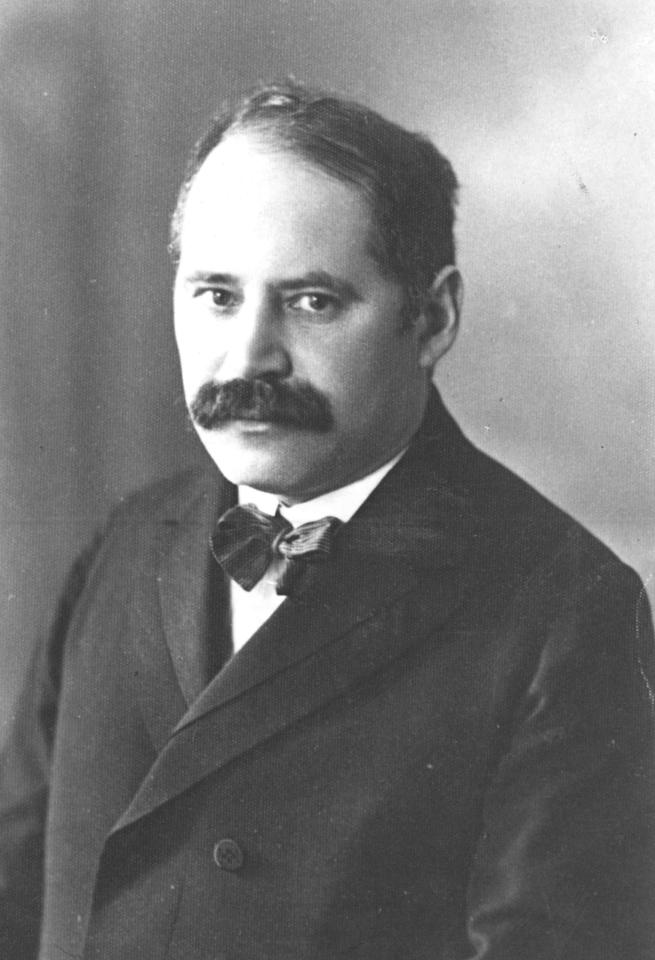
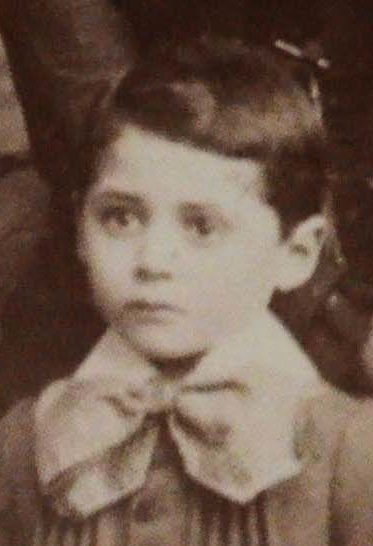
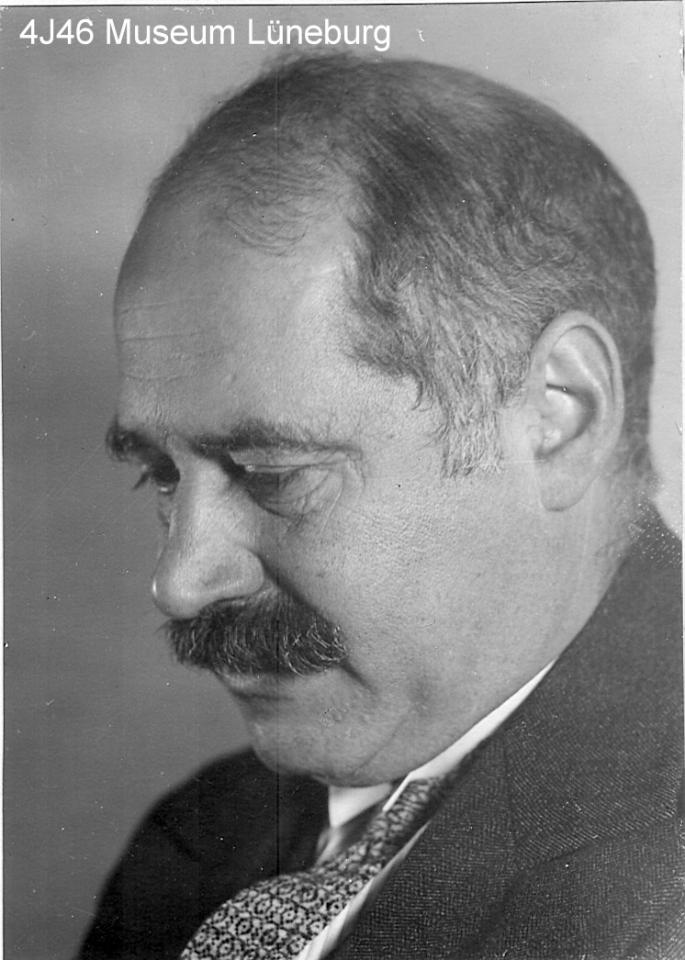
Hermann Jacobsohn was born in 1879 in Lüneburg at Große Bäckerstraße 25, the second child of banker Moritz Mendel Jacobsohn and his wife Betty, née Heinemann. He grew up in Lüneburg surrounded by his siblings and many cousins from the extended Heinemann family. When Hermann was ten years old, the Jacobsohn family moved into a villa on Haagestraße, which was surrounded by a large garden. Right next door was the venerable Johanneum grammar school which Hermann attended, just like his younger brothers Albert and Adolf and all his male cousins.
As a boy, in 1891, Hermann Jacobsohn wrote a letter to Emperor Wilhelm I that provides a good insight into the upbringing and atmosphere in the Jacobsohn household: "Your Majesty! I, one of Your Majesty"s lowliest subjects, humbly request that Your Majesty grant me a favor. I am attending the Quinta and my greatest wish is to become a cadet. However, I cannot become one because I am Jewish. My father, a local banker and former infantry lieutenant in the service of His Majesty, certainly agrees. And now I humbly request His Majesty to grant me this wish."
This early career aspiration did not come to fruition. Soon, the idea of a completely different career path took its place, undoubtedly strongly influenced by his profound education in classical languages at the Johanneum: Hermann Jacobsohn wanted to become a philologist. He had an extraordinary talent for languages and, it was often said, could learn any language within six weeks. He also had a keen interest in philosophy and intellectual history, which brought him close to his cousin Fritz Heinemann in Lüneburg.
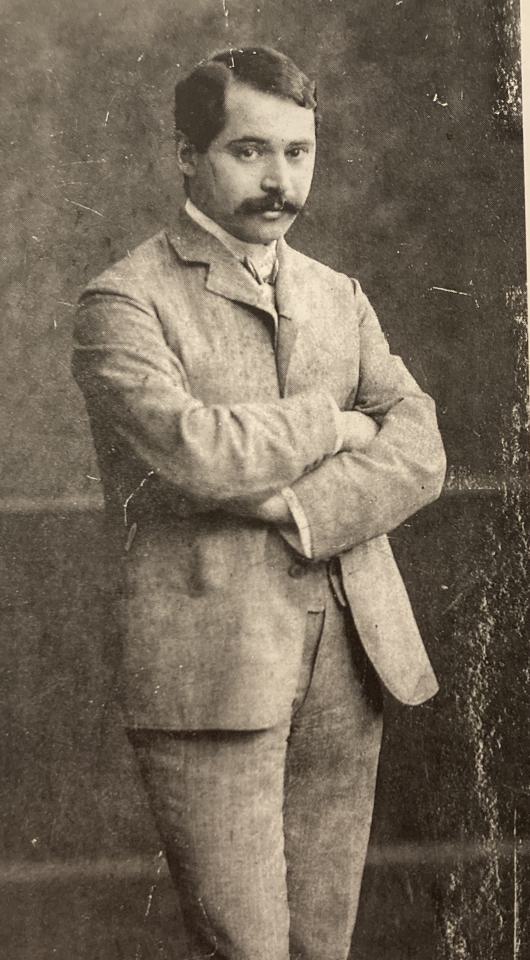
In 1898, Hermann Jacobsohn began studying classical philology and Indo-European studies, first in Freiburg, then in Berlin and Göttingen. In 1903, he completed his doctoral thesis on the poet Plautus and received his doctorate with “summa cum laude” honors from the University of Göttingen.
Immediately afterwards, he became engaged to Margarete "Grete" Flemming from Lüneburg, a daughter of the ophthalmologist Flemming, who had grown up a few steps away from the Jacobsohns in Wandrahmstraße, right next to the museum. Grete and Hermann had already met as teenagers in Lüneburg, during a private dance lesson at the Jacobsohns" house. In the run-up to this engagement, Hermann Jacobsohn had to wrestle with his father for a long time, who initially had great reservations about a non-Jewish daughter-in-law. In 1905, Hermann and Grete Jacobsohn got married.
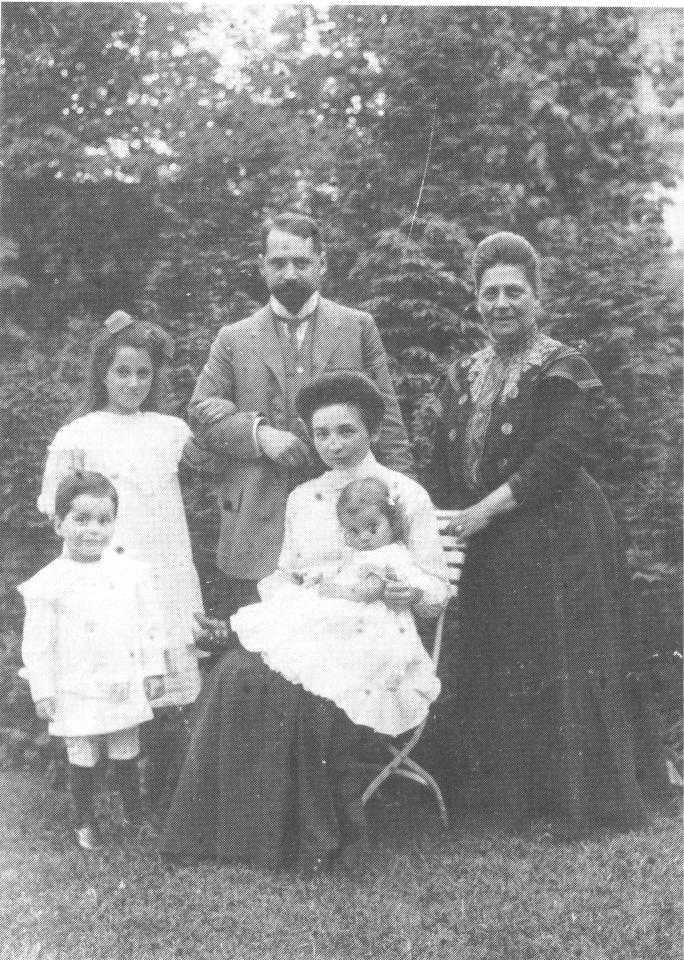
Hermann Jacobsohn"s first job after completing his doctorate was with the research and publication project “Thesaurus Linguae Latinae” in Munich, starting in 1904. And Munich was the place where Hermann and Grete Jacobsohn settled and started a family. Three of their children (Helmuth, Lore, and Hanna) were born there in the following years. Grete and Hermann Jacobsohn deliberately raised them in a “religiously free” manner, celebrating both Jewish and Christian holidays and familiarizing them with the basics of both religions.
In Munich, Hermann worked on his habilitation. At that time, it was virtually impossible for academics of Jewish origin to obtain a chair at a German university. But that was precisely Hermann Jacobsohn"s goal, against all odds. In 1911, he left Munich for the University of Marburg to take up a position as associate professor of Indo-European linguistics. After the war, it was converted into a full professorship. Jacobsohn, now holding the chair for Indo-Germanic Philology, had achieved his goal.
During World War I, Hermann Jacobsohn worked as an interpreter in various prisoner-of-war camps. While there, he was also able to advance his linguistic and historical studies, especially with regard to the Finno-Ugric languages. Shortly after the end of the war, in November 1918, Adolf was born, the fourth child of Hermann and Margarete Jacobsohn.
With the beginning of the Weimar Republic, Hermann Jacobsohn also became more politically active. He was one of the founding members of the German Democratic Party (DDP) and was active in Marburg as a party speaker during the election campaign for the 1919 National Assembly. In the years that followed, liberal politics and his commitment to the Weimar Republic remained of great importance to him, in addition to his numerous scientific research projects and publications as a highly respected professor in Marburg.
The rise of the National Socialists filled him with great concern. Because of his political activities and his Jewish heritage, the Nazi regime persecuted him from the very beginning. Nevertheless, in early 1933, Hermann Jacobsohn declined an offer of a professorship in Basel. His granddaughter Ruth Verroen writes: “In accordance with the motto and goal he had set for himself as a student – that Jews and non-Jews can and must live together in Germany – his place was and remained in Germany, despite all the hardships, fears, and bleak prospects.”
On April 25, 1933, shortly after the Nazis had come to power, he was dismissed as a professor at the University of Marburg. He was seized by existential despair, as Ruth Verroen writes: "Hermann Jacobsohn"s ‘life"s work’ had failed. On April 27, he threw himself in front of a passing train near Marburg"s Südbahnhof station, not far from his home on Weißenburgstraße."
On April 30, 1933 Hermann Jacobsohn was buried in the Jewish cemetery in his hometown of Lüneburg. The eulogy was given by Hermann Ubbelohde, a Protestant pastor and old friend of Jacobsohn"s. Ubbelohde was able to publish this speech in May 1933 in the magazine Christliche Welt ("Christian World"). He wrote about the extraordinary funeral service for Hermann Jacobsohn: "His funeral was made special by the fact that, in addition to the rabbi and representatives of his university and faculty, two friends from the German Protestant community commemorated the deceased: a historian and a friend from his student days [...] and a theologian from his North German homeland. In his hometown [...] he now rests from the conflict of opinions, toward eternal perfection."
His death, a reaction to the brutal actions of the still young Nazi dictatorship, was also noticed beyond Germany. At the end of April 1933, the New York Times published an article about Nazi violence against political opponents and minorities in Germany, in which Hermann Jacobsohn"s death was the headline and most important news item: “Professor ousted by Nazis ends life. – Jew dismissed from university leaps in front of train [...] – Berlin, April 28 (AP). Professor Hermann Jakobsohn, a Jew dismissed from the faculty of Marburg University, committed suicide in Marburg today by throwing himself in front of a train.” Hermann Jacobson"s cousin, Hans Heinemann, who had been living in the US for ten years, cut this article out of the newspaper and kept it until the end of his life.
In early May 1933, the local Lüneburg newspaper also published an obituary, although it did not specify the circumstances of his death: "Professor Dr. Hermann Jacobsohn, professor of comparative Indo-European linguistics in Marburg, who died tragically, was buried last Sunday morning in his hometown of Lüneburg. At the funeral service, which took place at his parents" house on Haagestraße, the outstanding scholar was honored by several people in honest and sincere mourning." Those mentioned were Rabbi Gordon from Harburg, the publicist Dr. Johannes Rathje as a friend, Professor Jacobstal from the University of Marburg, and Pastor Hermann Ubbelohde. The latter "summarized his life in the words of Holy Scripture: Hermann Jacobsohn proclaimed the Word, and through the Word he became a great blessing to so many; only the words of God can offer comfort in the tragedy of this death. Then the faithful son of our hometown was laid to rest beside his father: may the soil of his homeland be light upon him! All who knew him will never forget him."
Hermann Jacobsohn"s aunt in Lüneburg, Emilie Heinemann, who continued the chronicle in the Heinemann family Bible that her father Marcus Heinemann had once begun, added a short note to the list of Betty and Moritz Jacobson"s children: “Hermann J. died on April 27, 1933, a victim of the times.”
Sources and info:
Ruth Verroen, Leben Sie? Die Geschichte einer jüdischen Familie in Deutschland, Marburg 2015, passim, quotes pp. 13, 78, 79
Hermann Jacobsohn zum Gedenken. 30. August 1879-27. April 1933. Herausgegeben von Maja I. Schütte-Hoof im Auftrag der Gesellschaft für Christlich-Jüdische Zusammenarbeit e.V. an seinem 90. Todestag, Lüneburg, den 27. April 2023. Brochure download: https://lueneburg.deutscher-koordinierungsrat.de/gcjz-lueneburg-jacobsohn
Entry for Hermann Jacobsohn, Johanneum Website, Lüneburg, https://johanneum-lueneburg.de/wordpress/hermann-jacobsohn-detailinformationen/
Entry for Hermann Jacobsohn, Database „Verfolgung und Auswanderung deutschsprachiger Sprachforscher 1933-1945. Begründet von Utz Maas“, https://zflprojekte.de/sprachforscher-im-exil/index.php/catalog/j/271-jacobsohn-hermann/
Stumbling Stone for Hermann Jacobsohn in Marburg, Geschichtswerkstatt Marburg e.V.,
https://www.geschichtswerkstatt-marburg.de/projekte/jacobs.php
Obituary by Hermann Ubbelohde, Christliche Welt, May 20, 1933
„Professor Ousted by Nazis Ends Life“, in: New York Times, without date [End of April 1933], Private collection Kristina Heinemann
„Professor Hermann Jacobson gestorben“, in: Lüneburgsche Anzeigen May 2, 1933 (signed „-e“)
Family bible Marcus Heinemann, Museum Lüneburg