Here you can find names, dates of life, biographies and family stories about Jewish life in Lüneburg. Do you have further information, corrections, photographs, documents or suggestions?
Please feel free to contact us so that we can update the pages.
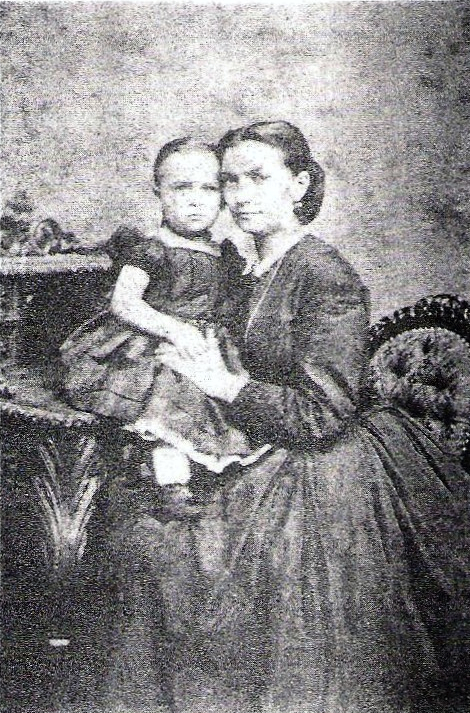
Sophie Lindenberg was born into the Lindenberg family in Vilsen near Hoya in 1844. She was the fourth of six children of merchant Gerson David Lindenberg and his wife Rosa Salomon, who came from Winsen. Sophie grew up well protected among her siblings in Vilsen.
On her mother"s side, the Vilsen Lindenbergs were related to the Heinemanns: Sophie"s grandmother Bräunchen Salomon née Heinemann was a sister of Lüneburg merchantSimon Heinemann.
In 1856, Sophie"s older sister Henriette married Lüneburg merchant Marcus Heinemann, a son of her great-uncle Simon Heinemann. It was perhaps in this context that the next connection between the two families came about: in 1864 Sophie married Marcus" younger brother Salomon Heinemann, who at this time took over the management of the Heinemann bank together with his brothers.
Sophie and Salomon initially lived in the Heinemanns" main house at Bardowicker Straße 6, above the bank. In the 1860s, they first moved in with Marcus and Henriette in nearby Große Bäckerstraße and then to an apartment Am Sande. In 1865, Sophie gave birth to their son Gustav Simon and in 1865 and in 1867 to their daughter Bertha. Around 1870, Sophie and Salomon moved into their own house in Obere Schrangenstraße with their two children. From around 1880, the family then lived iat Neue Sülze 3. This traditional Lüneburg house, with its prestigious rooms and beautiful garden, was to remain the center of the family until the 1930s.
In 1888, Sophie"s daughter Bertha married the Austrian merchant Hugo Kauders and moved to Hamburg with him to start a family. Sophie"s son Gustav Heinemann stayed in Lüneburg and joined the Heinemann (later Hannoversche) bank as a director. After his marriage, he moved out of the family home in 1904 and settled with his family in Frommestraße. Gustav"s children Erich and Lisa, like their cousins from Hamburg, often enjoyed visiting their grandmother Sophie, who was affectionately known as “Grauchen” in the family.
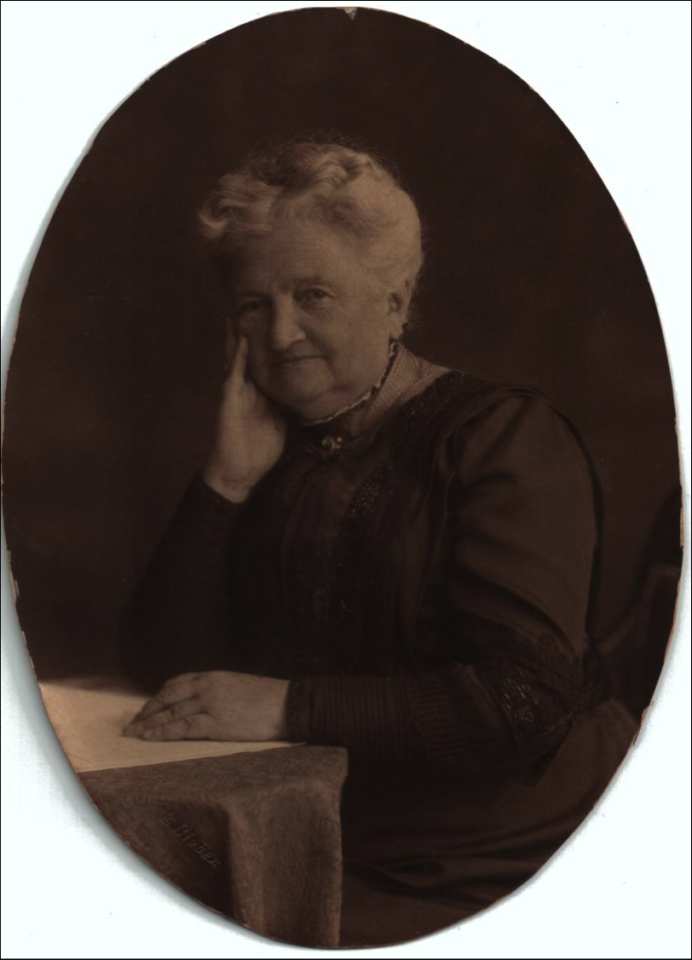
Sophie"s husband Salomon Heinemann died in 1902. From then on, and for another thirty years, Sophie now lived as a widow in the beautiful house on Neue Sülze. Decades later, in her home in Guatemala, her granddaughter Lisa Hirschmann, née Heinemann, wrote a wonderful portrait of Sophie Heinemann - and indeed of everyday life in Lüneburg towards the end of the 19th century:
“My grandmother, whom everyone called Grauchen, was a wonderful person. She lived at Neue Sülze 3, right next to the post office - she sat in a wing chair by the window, slightly elevated, watching the passers-by on their way to the post office very closely every day, and soon the whole town knew new love stories and passions. -- Her house was very big. The laundry room was in the basement. Even today I can still smell the hot water and soap and hear the chatter of Mrs. Sasse and Mrs. Brandes, who were responsible for the laundry and the mangle. They heated cast iron plates on a round coal stove, and when they needed a new hot iron, they grabbed it with thick rags. They folded the sheets and tablecloths exactly once in the middle and then placed them in a mangle that was operated with a large lever. As they did so, my grandmother sang a popular song: “Come and help me turn the mangle...” -- The hallway of the house, at street level, was large enough to fit a horse and cart. A series of large rooms led off the hallway. Grauchen told me that until the end of the 19th century they only had gas light and candles. To go to the toilet, you had to go into an inner courtyard where there was a small house with two wooden doors. A heart was cut into one of them to let some light into the toilet. As there was no running water yet, everything followed the path of gravity into the pit. From the courtyard you could see the beautiful church of St. Michaelis with its pretty tower and green copper roof, a chicken coop, a garden with lots of trees and a wooden house with stained glass windows. -- My grandmother had a large garden with currants, gooseberries, cherries, apples and chestnuts and everything else you could wish for. We children built tree houses there where our mother couldn"t find us. -- Back to the hallway: The house had a large wooden staircase with a wide handrail on which we children always slid down. You entered the drawing room/ballroom, which was magnificent, furnished with mirrors, marble and brocade, with lots of windows and a rug made from the fur of a Russian wolf, with a fearsome head with big teeth and glass eyes. Here we children spent many hours in the evening playing hide and seek while Grauchen snored peacefully. -- She always slept in very high beds, with a comforter on the mattress under which she slept. She covered herself with a quilt and a down comforter. The apartment was so cold in winter that we children who stayed with her when our parents were away washed as little as possible because the water was almost frozen. There was no heating in the rooms back then, just a stove in the kitchen and another in the hall where you could make delicious baked apples.”
Sophie Heinemann, née Lindenberg, died in November 1934, a few days before her 90th birthday. It was the end of an era: Her Lüneburg nieces Martha Heinemann and Betty Jacobsohn, née Heinemann, who had both lived in Lüneburg all their lives, had died only months earlier. Sophie was buried in the Jewish cemetery in Lüneburg next to her husband Salomon Heinemann.
Her gravestone is one of the few that still exist today, following the destruction and complete leveling of the cemetery during the Nazi era. Together with several other gravestones, Sophie"s stone was built into the foundations of a makeshift home erected in 1944. When this makeshift home was demolished in 1967, the stones came to light. It was several years before the gravestones were re-erected in the early 1970s, albeit not in their original location and only as fragments.
Sources and info:
Gravestone for Sophie Heinemann: epidat - Forschungsplattform jüdische Grabsteinepigraphik, Lüneburg, lbg-8
Lisa Hirschmann, nee Heinemann: Memories of her grandmother Sophie Heinemann, nickname „Grauchen“ and the family house in Lüneburg on Neue Sülze 3, in: LILRIC. Eine Familienchronik der Familie Heinemann aus Guatemala, 1993, pp. 209-211, 216-217 – translated from the Spanish original (kindly provided by Edgar Heinemann, Guatemala City)