Here you can find names, dates of life, biographies and family stories about Jewish life in Lüneburg. Do you have further information, corrections, photographs, documents or suggestions?
Please feel free to contact us so that we can update the pages.
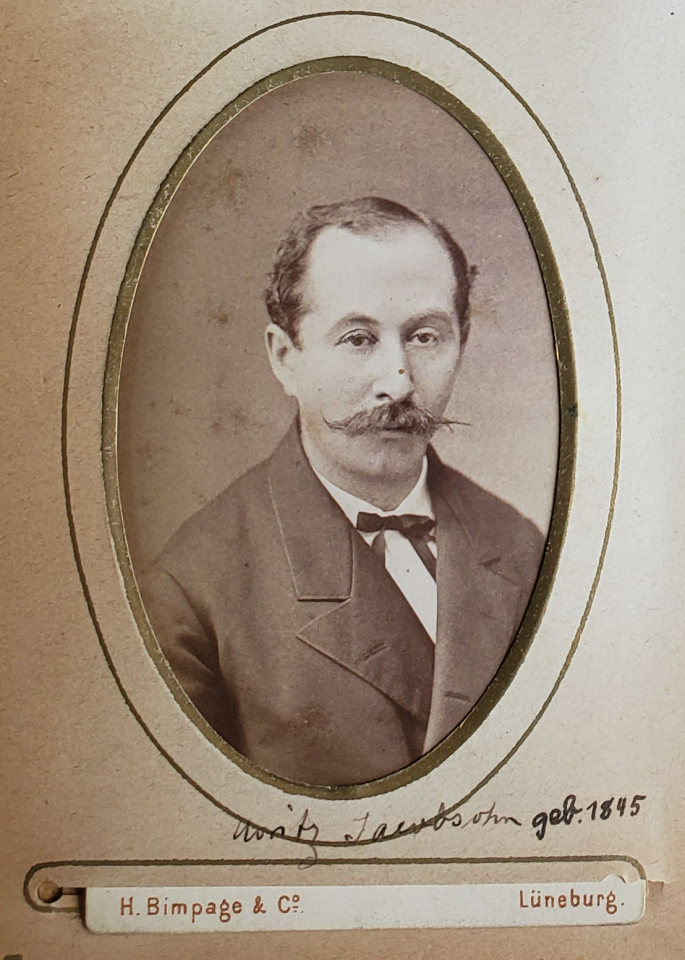
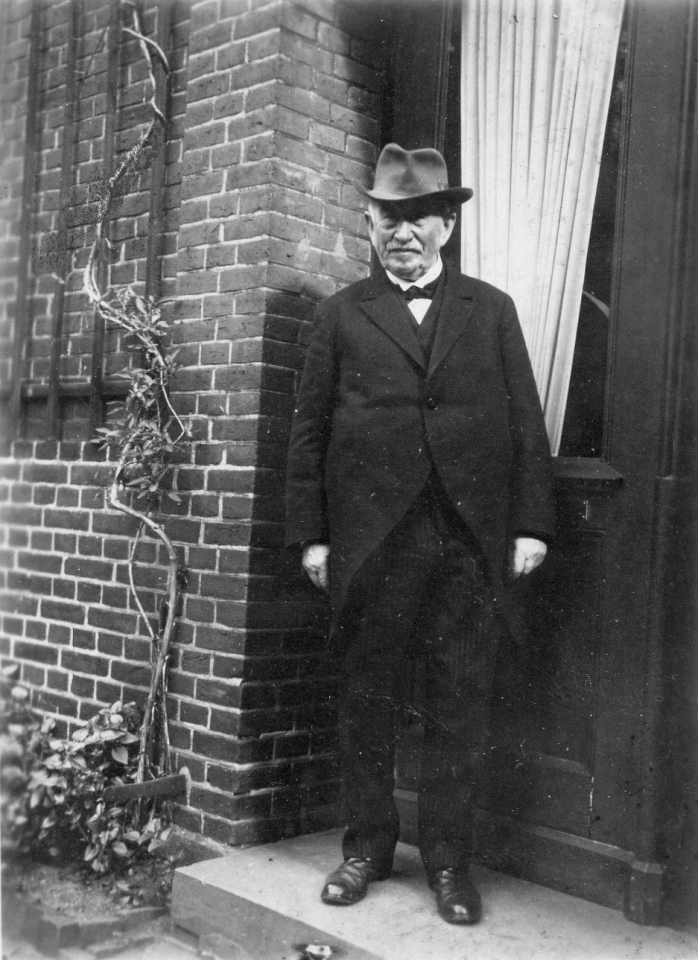
Moritz Mendel Jacobsohn was born in Nienburg an der Weser in 1845, the son of fur trader Anselm Jacobsohn and his wife Sara, née Blanck, who came from Braunschweig. He was the youngest of four siblings and the only son.
In April 1927, Moritz Jacobsohn wrote a 14-page memoir “at the request of the archivist of the city of Lüneburg, Prof. Dr. Reinecke.” Because of this, we are fortunate to know many details about his life and family history. Looking back on his upbringing in Nienburg, Jacobsohn wrote: “I had a happy childhood and youth, surrounded by love.” He attended the religious school of the Jewish community and the Progymnasium (secondary school) in Nienburg, which he left in 1859.
Even as a young man, he was hard-working, eager to learn, and full of curiosity: he worked in his father"s business, where he learned the trade of a merchant, and at the same time attended business school. And furthermore, he wrote, “I perfected my knowledge of French and English, as well as world history and German literature, through self-study.” He also kept himself physically fit by exercising regularly.
In 1863, he moved from Nienburg to Lüneburg to work as a trainee in the banking business of Wolf Hirsch Michaels, at Große Bäckerstraße 25. He quickly rose through the ranks: by 1868, he was already an authorized signatory and deputy managing director of this influential private bank.
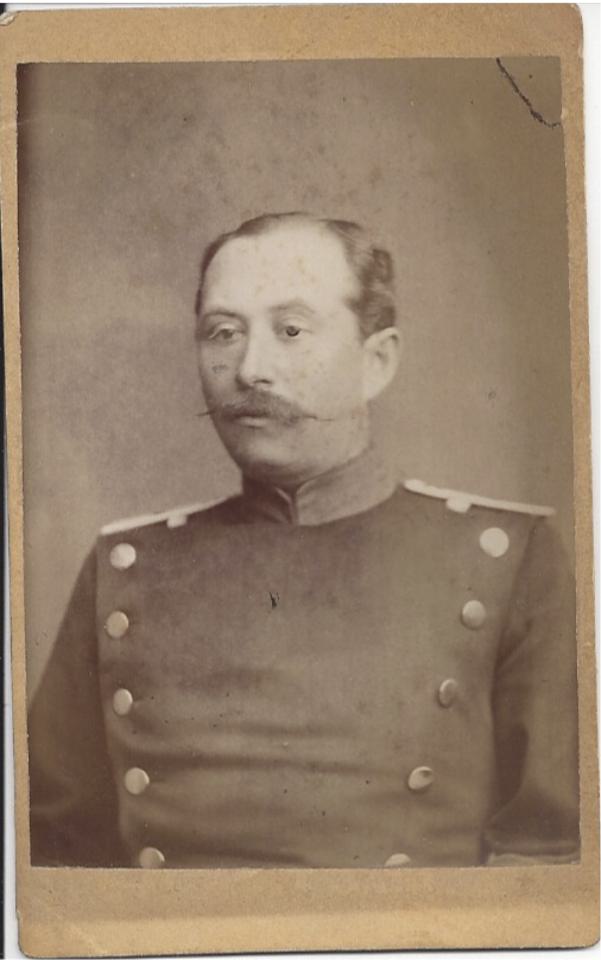
Another important part of Moritz Jacobsohn"s life was the military – or, as his memoir puts it, “the glorious Prussian army.” He completed his regular military service in Lüneburg in 1867–1868 as a reserve non-commissioned officer.
Moritz Jacobsohn describes what happened next, painting a picture of the situation in Lüneburg at the beginning of the Franco-Prussian War in 1870: "From an early age, it was my fervent wish to be able to fight for my fatherland, for the unification of Germany; the year 1870 brought me the fulfillment of this wish. There was great excitement about the arrogance and provocative language of the French government [...]. On the evening of July 15, I received a business telegram with the news that France had declared war. With this telegram, I hurried to my former superior, Major v. Hülst. On the way, I met Captain v. Hayn in front of the castle barracks, who had the battalion march out and announced the declaration of war. In the meantime, the market square had filled with a large crowd, and the song “Wacht am Rhein” was sung with enthusiasm. The following day, mobilization began."
Together with the other Lüneburg reservists, Jacobsohn then began the war as part of the 2nd Hanoverian Infantry Regiment No. 77. After serving and being wounded in the important Battle of Spichern on August 6, 1870, he was decorated and promoted to officer. At that time, this was not a matter of course for soldiers of Jewish descent. Until the end of the war, he served as an officer in various positions and took part in victory celebrations in Hanover and Celle. “I returned to Lüneburg, and it was not easy for me to get used to civilian life and my old circumstances again.” After returning from the war, Moritz Jacobsohn founded the Lüneburg Officers" Association, which always held great significance for him. He repeatedly and enthusiastically took part in reserve exercises and maneuvers.
In 1871, Moritz Jacobsohn took over the banking business from his former superior who had died in 1869. Jacobsohn now called it “W.H. Michaels Nachfolger.” He brought in Jacob Valentin from Sarstedt as a partner, who had been married to Moritz Jacobsohn"s sister Friederike for several years. The Valentins moved in at Große Bäckerstraße 25, where Moritz Jacobsohn had been living and working since 1863. Looking back, he wrote: “I spent happy years with the Valentin family.” He also did very well financially: “I was given a lot of trust, and I always stayed away from speculation and did not encourage others to engage in it, so that the great crisis of 1873, the so-called Vienna crash [...] did not affect me.”
In 1876, Moritz Jacobsohn got married. His wife was Betty Heinemann, the eldest daughter of Marcus Heinemann, a prominent banker and merchant in Lüneburg. This connected Moritz Jacobsohn to one of Lüneburg"s largest and most important Jewish families. Although the two banking houses could certainly be considered competitors, father-in-law and son-in-law seem to have gotten along well. Apparently, there was enough room in Lüneburg for both banks.
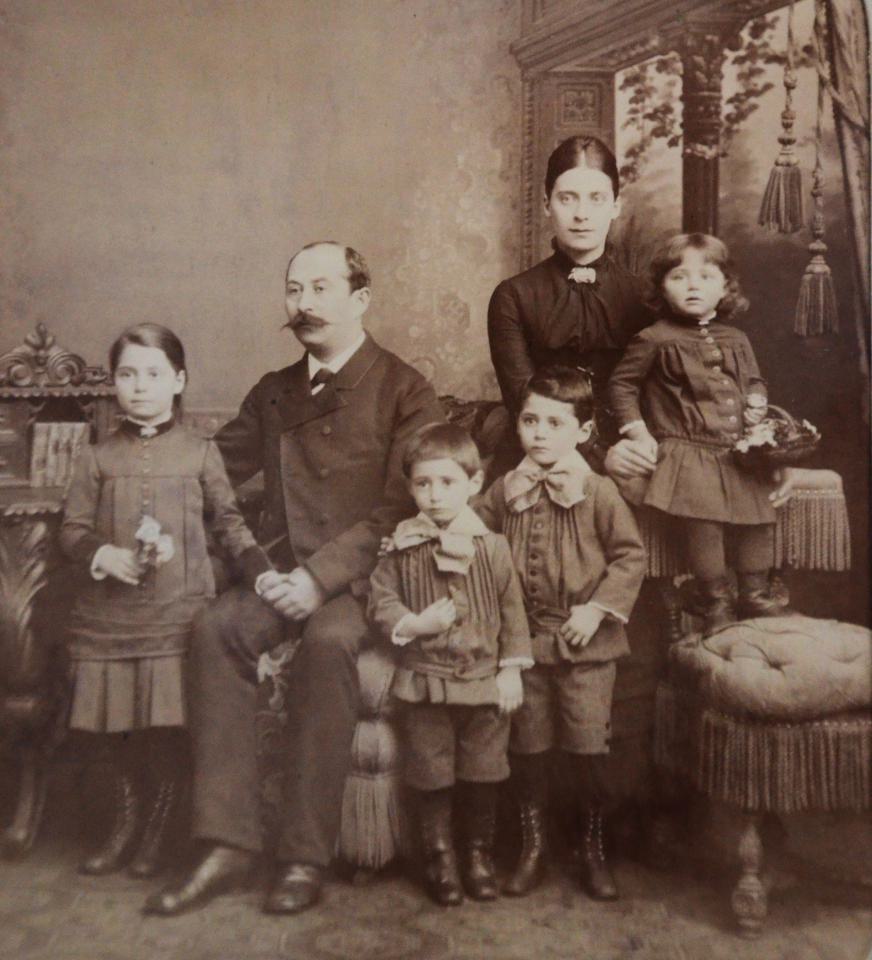
Betty and Moritz Jacobsohn initially lived at Große Bäckerstraße 25, where the bank also had its offices. Their five children, Martha, Hermann, Albert, Elisabeth, and Adolf, were born there. In 1889, the family moved into a large villa on Schulstraße (now Haagestraße), which had been built by the manufacturer and hotel owner August Wellenkamp. In this peaceful and beautiful location, Betty gave birth to the youngest child, Ruth, in 1900. “The large, beautiful garden belonging to the house was our joy in all seasons, providing us with flowers and fruit. The late Wellenkamp, originally an architect and skilled archaeologist, had placed various ancient works of art in the garden, including the headpiece of the Luna Column [...] and two so-called Beischläge. I donated both pieces to the museum.”
1889 was also the year in which Moritz Jacobsohn brought his two unmarried sisters, Bertha and Sophie, to Lüneburg after the death of his parents in Nienburg. They two ladies moved into Große Bäckerstraße 25, presumably into the rooms where Moritz and Betty Jacobsohn had previously lived with their children.
Meanwhile, the Jacobsohn children grew up in the villa on Schulstraße. The boys attended the venerable Johanneum Gymnasium, just a few steps away, and the girls attended the Höhere Töchterschule (today the Wilhelm Raabe School). Education was highly valued in the family, and Moritz Jacobsohn noted with pride in his memoirs that their children had always been among the best in their classes. The eldest son, Hermann, pursued an academic career as a linguist, while his son Albert became a banker like his father. His son Adolf became a lawyer. While Martha and Elisabeth were not allowed to continue their studies beyond secondary school, the youngest daughter, Ruth, was the first girl in Lüneburg to graduate from the Johanneum and then studied in Marburg and Berlin.
In 1901, Moritz Jacobsohn"s son Albert volunteered for his father"s old regiment, the 77th, and aspired to become a reserve officer. Although he passed all his exams with flying colors and was very popular with his superiors and comrades, he was suddenly denied promotion to officer in 1903 on the basis of falsified poor evaluations, apparently because of his Jewish origins. His father, who himself had been promoted to officer in the war of 1870/71, could not believe it. Moritz Jacobsohn later wrote in his memoirs: “It was well known that no Jewish officer cadet had been promoted under Emperor Wilhelm II, but I had believed that the son of a veteran field officer would be treated differently, and with that in mind I wrote to the emperor. I was deeply offended by this shameful deception.” However, even the petition to the emperor did not help. For Moritz Jacobsohn, this “miserable, sad affair” was a bitter experience. For Albert and his siblings, it was probably a clear signal that there was still no real equality for Jews in the German Empire.
Moritz Jacobsohn was involved in voluntary work throughout his life, including as a board member of the Reserve Officers" Association, as a founding member and long-time treasurer of the Lüneburg Museum Association, and as a founder and supporter of the volunteer fire department. Last but not least, he was very active in the Lüneburg synagogue community, which he led for the first time from 1884 to 1890. He then handed over the chairmanship to his father-in-law, Marcus Heinemann. After Heinemann"s death in 1908, Moritz Jacobsohn became head of the community for a second time and remained so until 1927.
During his second term in office in particular, the synagogue community faced major challenges: the newly immigrated Jewish families from Eastern Europe, who had fled pogroms and war, were not exactly welcomed with open arms by some of the long-established Jews of Lüneburg. These reservations, as well as the significant social and religious differences, led to the community soon becoming effectively divided into two groups. Moritz Jacobsohn attempted to mediate and assist wherever he could.
Heinz Hemut Schiffmann, who belonged to a very religious family which had come from Galicia in 1914, recalled decades later: "Kommerzienrat Jacobsohn came to the synagogue every week. He didn"t think much of Jewish rites, he wasn"t very religious, but he came to the synagogue and always considered himself a Jew. Almost every Friday, he would come up to my father"s apartment and bring him the newspaper "Jüdische Rundschau". Then they would talk for a long time in the living room, even though they came from completely different backgrounds and had different attitudes toward life. I was still very young at the time, but I think that bringing the newspaper was just an official occasion to talk at length about Judaism. He accepted my father as a rabbi and therefore sought conversation with him. We were also invited to Kommerzienrat Jacobsohn"s house a few times, but we didn"t eat there because the food wasn"t kosher. Nevertheless, my father and he always had a good relationship."
In recognition of his great commitment and his many charitable donations, the government of the German Empire awarded Moritz Jacobsohn the honorary title of “Kommerzienrat” (commercial councilor) in 1913. This official state recognition of his services meant a great deal to him.
Moritz Jacobsohn"s great-granddaughter Ruth Verroen, who has studied the history of the Jacobsohn family extensively, characterizes the family as follows: "The basic political stance in the Jacobsohn household can be described as nationalistic, patriotic, and at the same time socially oriented. The latter is evident from the commitments described above, as well as from the family"s keen interest in and engagement with the ideas of Friedrich Naumann. [...] The national or patriotic sentiment can best be expressed through a few anecdotal stories. Betty and Moritz"s grandchildren still remember that French terms were not allowed to be used in their grandparents" house. If they asked for "sauce" at the table, this could lead to a stern admonition that it was called "Tunke" in German. Words such as ‘Trottoir’ or "Portemonnaie," which were common at the time, were of course also not permitted."
In 1911, the second son, Albert, who was to take over his father"s banking business, fell ill with a brain tumor. Even the most modern treatment methods failed to cure him, and Albert died in April 1912. To commemorate the passing of their son, Moritz and Betty Jacobsohn donated a hall for the Jewish cemetery and provided the basis for a childrens" convalescence home on the outskirts of Lüneburg.
After Albert"s untimely death, Moritz Jacobsohn now pinned his hopes on Adolf, his youngest son. Adolf had studied law and originally wanted to emigrate to Palestine as a Zionist and farm there. However, at his father"s request, he returned to Lüneburg in 1913 and began to familiarize himself with the banking business. During World War I, he volunteered for military service. On the Western Front in 1917, he was promoted to officer, awarded the Iron Cross, and wounded several times. In March 1918, he fell in Flanders.
Against the background of this second heavy blow, Moritz Jacobsohn decided to sell the banking business. In August 1920, his traditional private bank, W. H. Michaels Nachfolger, became a branch of the Barmer Bankverein, a modern banking corporation. Moritz Jacobsohn retired from the business, and his former employees Ferdinand Valentin and Edmund Levy now managed the new branch. It was not an easy step, as Jacobsohn himself noted in retrospect: "It was very difficult for me to leave the business in which I had been active since my youth, since 1863. Under my leadership, it had experienced a great upswing and was important for the banking system of the town of Lüneburg. Many owe their rise or advancement to the credit we granted on a large scale, albeit with the necessary caution."
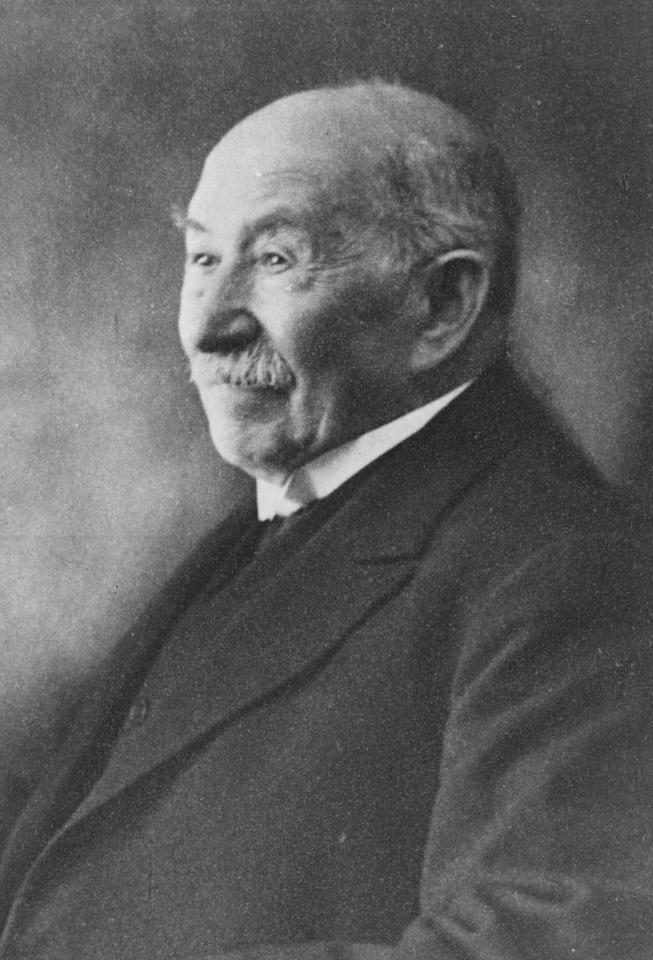
In his final years, Moritz Jacobsohn devoted himself mainly to his family, the synagogue community, and his wide-ranging interests. He died on January 2, 1932, shortly after his 86th birthday. A detailed obituary appeared in the Lüneburgschen Anzeigen newspaper. It began with the words: “Inexorable death has entered the modest house on Haagestraße and taken home this refined, quiet, always helpful man. Kommerzienrat Jacobsohn is no longer among the living. The town of Lüneburg owes this man a great deal.”
And at the end of the obituary, it becomes clear that the author was very fond of Moritz Jacobsohn and knew him fairly well: "Anyone who had the opportunity to sit opposite the old gentleman in his study and chat with him will have been surprised by his versatile, profound education, his great understanding of science, and his love of art. These inclinations also left their mark on his home. But higher than science and art was his love for his fellow human beings. With Jacobsohn"s passing, we have lost an outstanding person who never made a fuss about what he did for others. [...] His memory will always be honored in Lüneburg."
Sources and information:
Moritz Jacobsohn, Mein Lebenslauf (My Life). MS, Lüneburg 1927, in: Leo Baeck Institute New York, ME 1003. Available online: https://digipres.cjh.org/delivery/DeliveryManagerServlet?dps_pid=IE8644976
Ruth Verroen, Leben Sie? Die Geschichte einer jüdischen Familie in Deutschland (Are You Alive? The Story of a Jewish Family in Germany), Marburg 2015, pp. 12-13 and passim.
Sybille Bollgöhn, Jüdische Familien in Lüneburg (Jewish Families in Lüneburg), Lüneburg 1995, pp. 90-91.
Lüneburgsche Anzeigen (Lüneburg Advertisements) from January 4, 1932, p. 1.
Name variants: Mendel